The Nine Art Forms
One crest.
Nine art forms.
One honored
each year.
The club’s 1916 founding mission names nine arts. Each cycle the scholarship honors one of them: the crest stays, and that year’s emblem, a period silhouette in its own heritage color, takes the frame.
The emblems
Nine emblems, one language
Every emblem is drawn to the crest’s own measurements and set in a
color from the world of 1916: slate of drafting rooms, sepia of the
darkroom, gold of gilt frames. Together they make one family; each
year, one steps forward. The mark’s story is
here.
This cycle · Cinematography
Documentary film, a subgenre of cinematography, one of the club’s nine founding art forms. The 2026–27 competition is in
Documentary Filmmaking. Read the
competition brief.
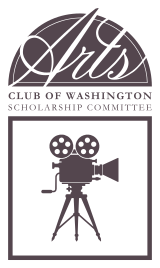
2026–27 · this year’s art form
Cinematography
charcoal plum
The youngest art on the 1916 list: cinema was barely two decades old when the club named it beside painting and sculpture. The emblem is a hand-cranked camera on wooden sticks, the machine of the silent era. This cycle the scholarship returns to it through documentary film: find a true story and tell it well.
This year’s competition: Documentary Filmmaking →
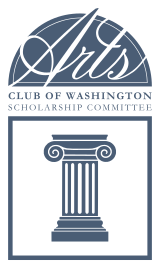
Architecture
slate blue
Washington in 1916 was a city being drawn: Beaux-Arts fronts along the avenues, the McMillan Plan still fresh on the drafting tables. The club’s architects belonged to that drawing, and its emblem is a columned elevation, the working language of the T-square era.
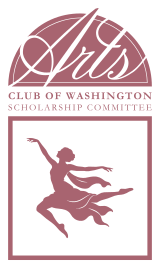
Dance
dusty rose
The 1910s were the years dance broke from the ballroom: Isadora Duncan’s generation made movement itself an art of ideas. The emblem holds a dancer mid-phrase, drawn in the poster silhouette of that decade.
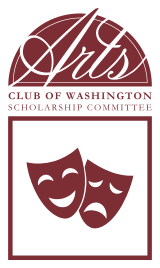
Drama
oxblood
Before microphones, an actor’s instrument was the whole hall. The club’s stage tradition runs back to parlor theatricals and little theaters of the teens. The emblem carries the twin masks that have signed the theater since antiquity.
Literature
forest green
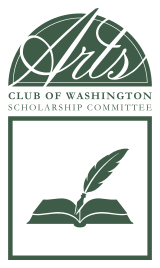
A club founded by writers as much as painters: readings in the parlor, magazines on the hall table, the capital’s men and women of letters at one long table. The emblem is an open book with an inkwell and pen, the desk of 1916.
Music
antique gold
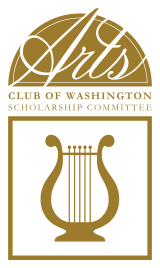
Evenings at the club meant live performance: parlor recitals, chamber programs, songs at the piano. The emblem sets a lyre, music’s oldest signature, in the gold of gilt frames and brass instruments.
Painting
terracotta
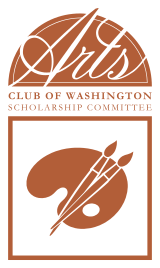
The gallery walls came first: the club was built around exhibiting painters, and the Monroe Gallery still hangs working artists today. The emblem is palette and brushes, in the earth red of studio clay and sienna.
Photography
sepia brown
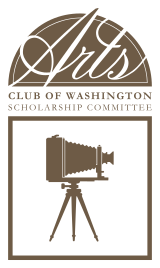
In 1916 photography was still arguing its way into the fine arts, and the club took its side early by naming it a founding form. The emblem is a bellows camera on a tripod, in the sepia of the darkroom print.
Sculpture
stone teal
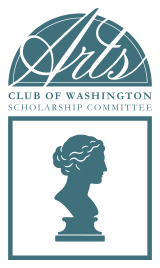
Washington was a sculptor’s city: memorial commissions, federal pediments, studios full of clay and stone. The emblem is a classical bust on its plinth, in the patina teal of weathered bronze.
The other eight wait their turn. When the cycle
changes, the crest stays; only the emblem, the color, and the call for
entries rotate.